In this article
This question comes up on nearly every water heater replacement we quote, usually because the homeowner has spotted a small tank mounted above the heater on someone else's install and wondered whether they are missing something. It is a fair question, and the answer is more often yes than most people expect.
The Physics in One Paragraph
Water expands when you heat it. A standard 50 gallon tank heating incoming water from roughly 10 degrees to 60 degrees gains about two litres of volume. That water has to go somewhere.
In an older open system it simply pushes back into the municipal main, and nobody notices. The problem is that most homes are no longer open systems.
Why Your Home Is Probably Closed
A closed system is any home where water cannot flow backwards into the city main. Two common devices cause this. A backflow preventer, which is required on many services and is now standard on new builds and on any property with irrigation. And a pressure reducing valve, fitted where street pressure is too high, which most modern versions will not let water pass back through.
If you have either device, your plumbing is a sealed vessel. That expanding two litres of water has nowhere to go, and because water does not compress, the pressure in your system spikes every single time the heater fires. We regularly measure static pressure around 60 psi in Barrie homes that climbs past 150 psi during a heating cycle.
What Happens Without One
The most obvious symptom is the temperature and pressure relief valve on the heater dripping or discharging. Homeowners often assume the valve has failed and replace it. It has not failed. It is doing precisely its job, venting the overpressure your system has nowhere else to put. Replacing the valve without fixing the cause just means the new one drips too.
The less obvious damage is cumulative. Repeated pressure cycling is hard on everything downstream: tap cartridges wear out early and start dripping, toilet fill valves fail, washing machine and dishwasher inlet valves take a beating, and the water heater tank itself works its seams and its glass lining harder than it was designed for. Water heaters in closed systems without expansion control do not usually fail dramatically, they simply fail years earlier than they should.
It is also worth knowing that many manufacturers require thermal expansion control for the warranty to remain valid. Skipping the tank on a new install can quietly void the warranty on the heater it is protecting.
What the Tank Does
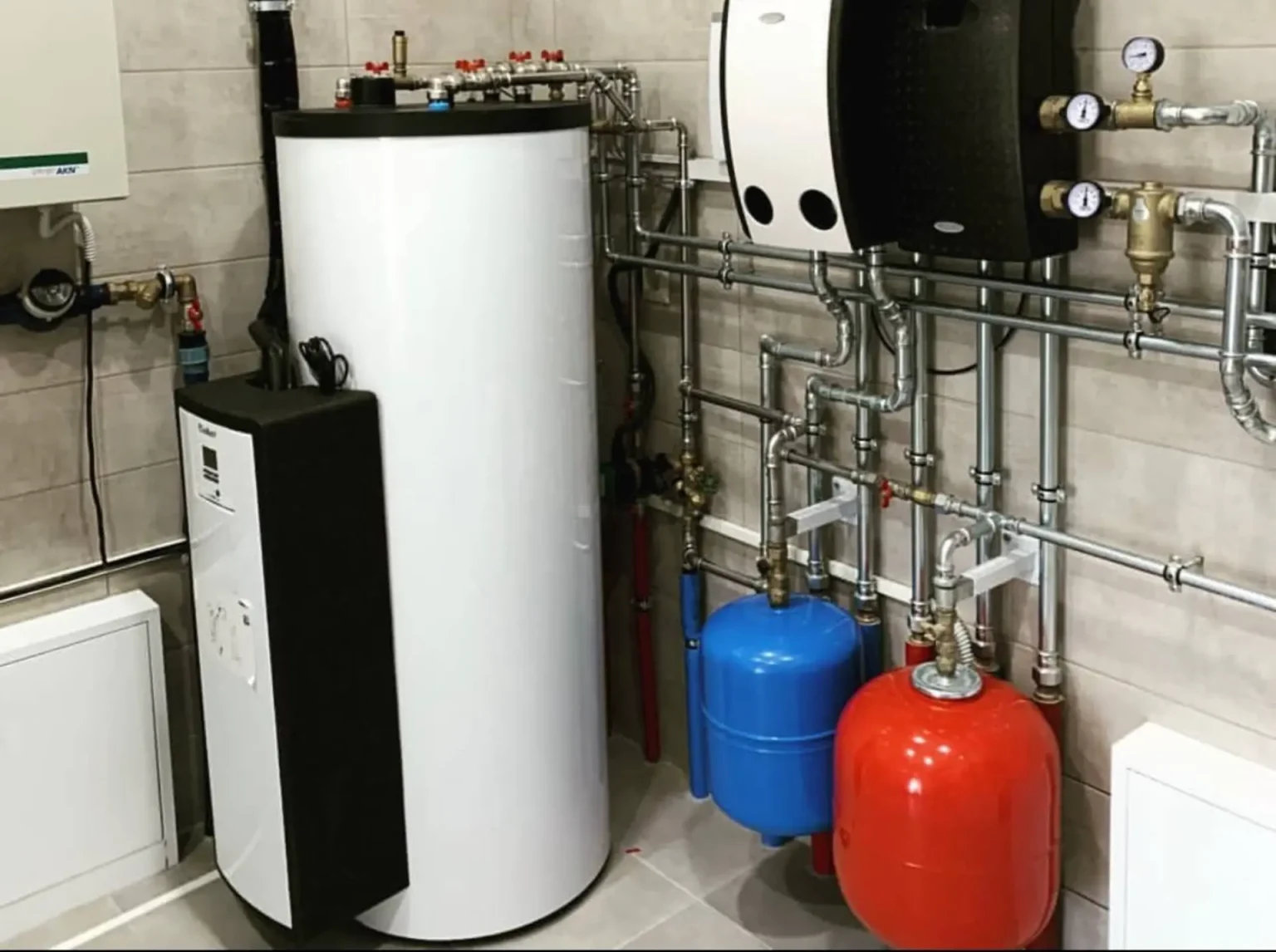
An expansion tank is a small vessel, typically two to five gallons for residential use, divided internally by a rubber diaphragm. One side connects to your plumbing, the other holds compressed air. When heated water expands, it pushes the diaphragm and compresses the air, which does compress. Pressure stays where it should. When you draw hot water, the diaphragm pushes back.
It has no moving parts you interact with, uses no power, and mounts on the cold water inlet line to the heater. The single thing that matters at installation is that the air charge is set to match your home's static water pressure. A tank precharged at the factory to 40 psi installed in a home running 65 psi is barely doing anything, which is a common and easily avoided mistake.
How to Tell If You Need One
Look at where the water line enters your home and check for a backflow preventer or a pressure reducing valve. Then look above your water heater for an existing expansion tank, a small tank roughly the size of a football on the inlet pipe. If you have the first and not the second, you need one.
The other clue is symptomatic. If the relief valve on your heater weeps, if taps briefly run hard when first opened after nobody has used water for a while, or if you hear the plumbing knock when the heater cycles, thermal expansion is a likely cause.
The tank itself is inexpensive and installation is quick, usually done as part of a heater replacement with no meaningful addition to the job. Retrofitting one to an existing heater is straightforward too, and we will check your static pressure and precharge the tank to match rather than fitting it out of the box.
Plumbify installs and services tank and tankless units across Simcoe County. If you are unsure what you have, our water heater service team can check it during a routine visit, and general plumbing repair and maintenance covers the pressure side of the system. Call 249-535-3789, every day from 6 AM to 9 PM.
About the author

Plumbify Team
Licensed plumbers in Barrie, ON. Owner-operated since 2007, working in Simcoe County homes every day.
Written from real service calls
Need a plumber in Barrie?
Same-day service, 6 AM to 9 PM, 7 days a week.