In this article
Every plumber has an opinion about the bottle of drain cleaner under your sink, and most of them lead with the same line: never use it. That is not quite honest. Chemical drain cleaner does work on some clogs. The real answer is that it works by a mechanism that is hard on your plumbing, and whether that matters depends on what the clog is and what your pipes are made of.
Here is what actually happens in the pipe, and when reaching for the bottle is a reasonable call versus a genuinely expensive mistake.
What the Chemicals Actually Do
Most household drain cleaners are caustic, usually sodium hydroxide, or acidic, usually sulphuric acid. Both work by chemically breaking down the clog, and both give off significant heat while doing it. A caustic cleaner sitting on a hair and soap blockage can push the water around it well past 80 degrees Celsius.
That heat is the whole problem. It is also why the instructions tell you to leave it and walk away, because the reaction needs time. If the clog is loose and the cleaner reaches it, the blockage dissolves and drains away. If the clog is solid, the cleaner pools on top of it, and now you have a column of extremely hot caustic liquid sitting against one section of pipe for half an hour.
It Depends What Your Pipes Are Made Of
PVC is the common drain material in newer Barrie homes and it softens with heat. It will not melt through in one application, but repeated use of caustic cleaner on the same standing clog is a known cause of warped joints and weakened glued connections. ABS behaves similarly.
Older homes are the bigger worry. Galvanised steel drain lines corrode from the inside out, and acidic cleaner accelerates that directly. Cast iron is tougher but not immune. If your home still has original drain stacks, chemical cleaner is genuinely a poor idea.
The other consideration is what the cleaner does not touch. It will not dissolve tree roots, a collapsed section of pipe, a wipe, or a toy. In all of those cases the chemical simply sits there, and when we arrive to snake or auger the line, we are now working with a pipe full of caustic liquid. That is a safety issue for whoever opens the cleanout, which is why we always ask what has been poured down before we start.
When It Is Actually Reasonable
A slow bathroom sink or shower that still drains, just lazily, with a known cause of hair and soap, and modern PVC plumbing: an enzyme cleaner is the better tool, but a single application of a chemical cleaner is unlikely to hurt anything.
A completely blocked drain, a kitchen line packed with grease, a toilet, a floor drain, any drain in a house with old metal plumbing, or a drain that has already had chemical cleaner poured into it once with no result: leave the bottle alone. Repeat applications on a solid clog are exactly the scenario that damages pipes, and the second bottle almost never works when the first one did not.
What Works Better
For maintenance, enzyme or bacterial cleaners are slow but genuinely safe. They digest organic buildup over hours rather than attacking it, and used monthly they keep kitchen and bathroom lines clear without touching the pipe itself.
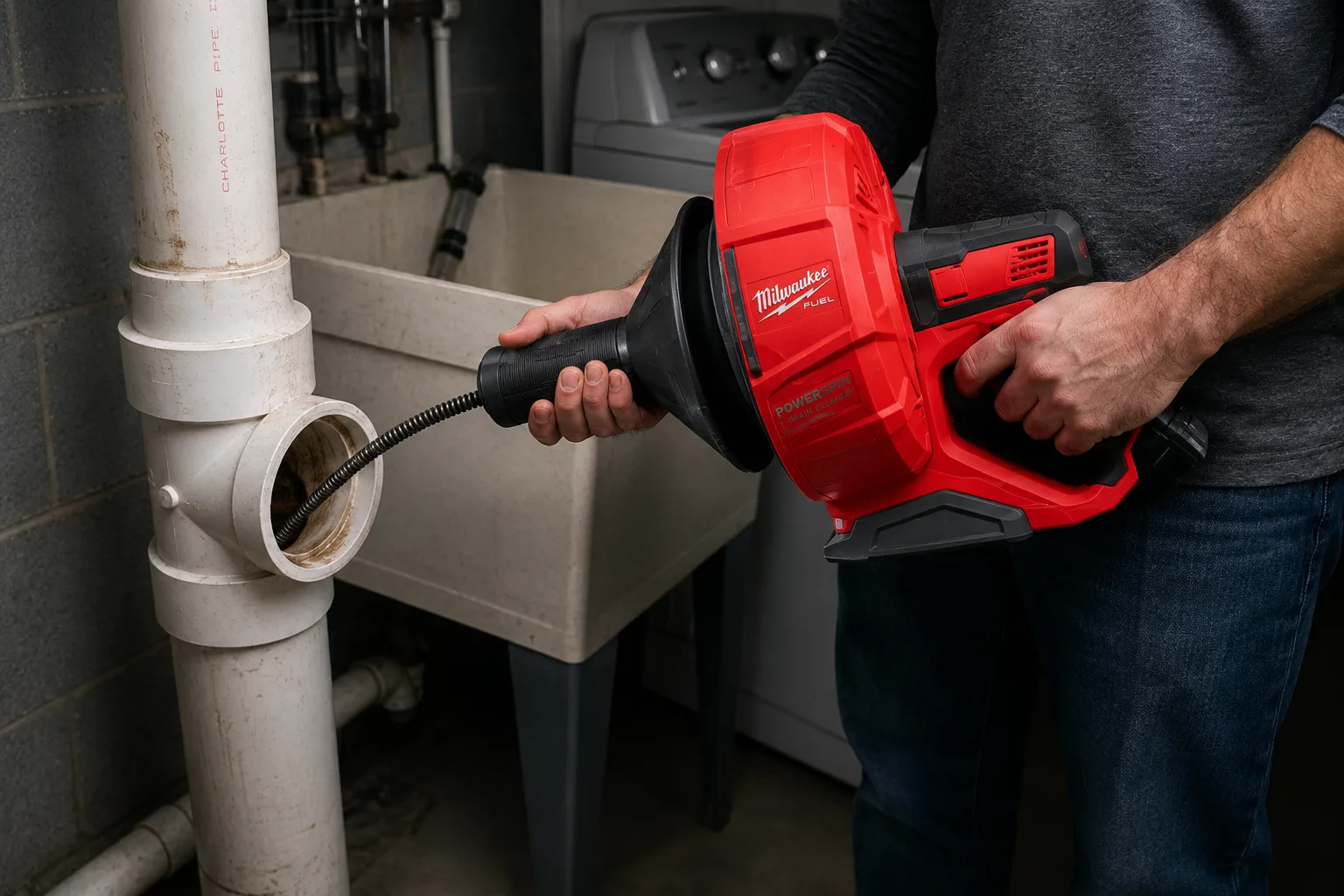
For a clog that already exists, mechanical removal beats chemistry every time. A drain snake reaches the blockage and pulls it out rather than trying to dissolve it in place. For kitchen lines thick with grease, or for a main line, hydro jetting scours the pipe wall back to full diameter, which is something no chemical does.
And if the same drain keeps blocking every few months, the clog is a symptom rather than the problem. Recurring blockages usually mean a belly in the line, root intrusion at a joint, or a partial collapse, and no amount of cleaner fixes any of those. A camera inspection answers it in twenty minutes.
The Short Version
Chemical drain cleaner is a tool with a narrow use case and real downsides. On a slow drain in modern plastic pipe it is mostly harmless. On a fully blocked line, in old metal plumbing, or used repeatedly, it is a slow way to damage the pipe while not fixing the clog.
When a drain has stopped, Plumbify clears it mechanically with pipe and drain cleaning, and we run a camera when a line keeps coming back. If it is a main line or you suspect roots, our sewer line service covers it. Call 249-535-3789 in Barrie, 6 AM to 9 PM, seven days a week, and tell us if anything has already been poured down there.
About the author

Plumbify Team
Licensed plumbers in Barrie, ON. Owner-operated since 2007, working in Simcoe County homes every day.
Written from real service calls
Need a plumber in Barrie?
Same-day service, 6 AM to 9 PM, 7 days a week.